 SUMAHAA← Back to Saree Heritage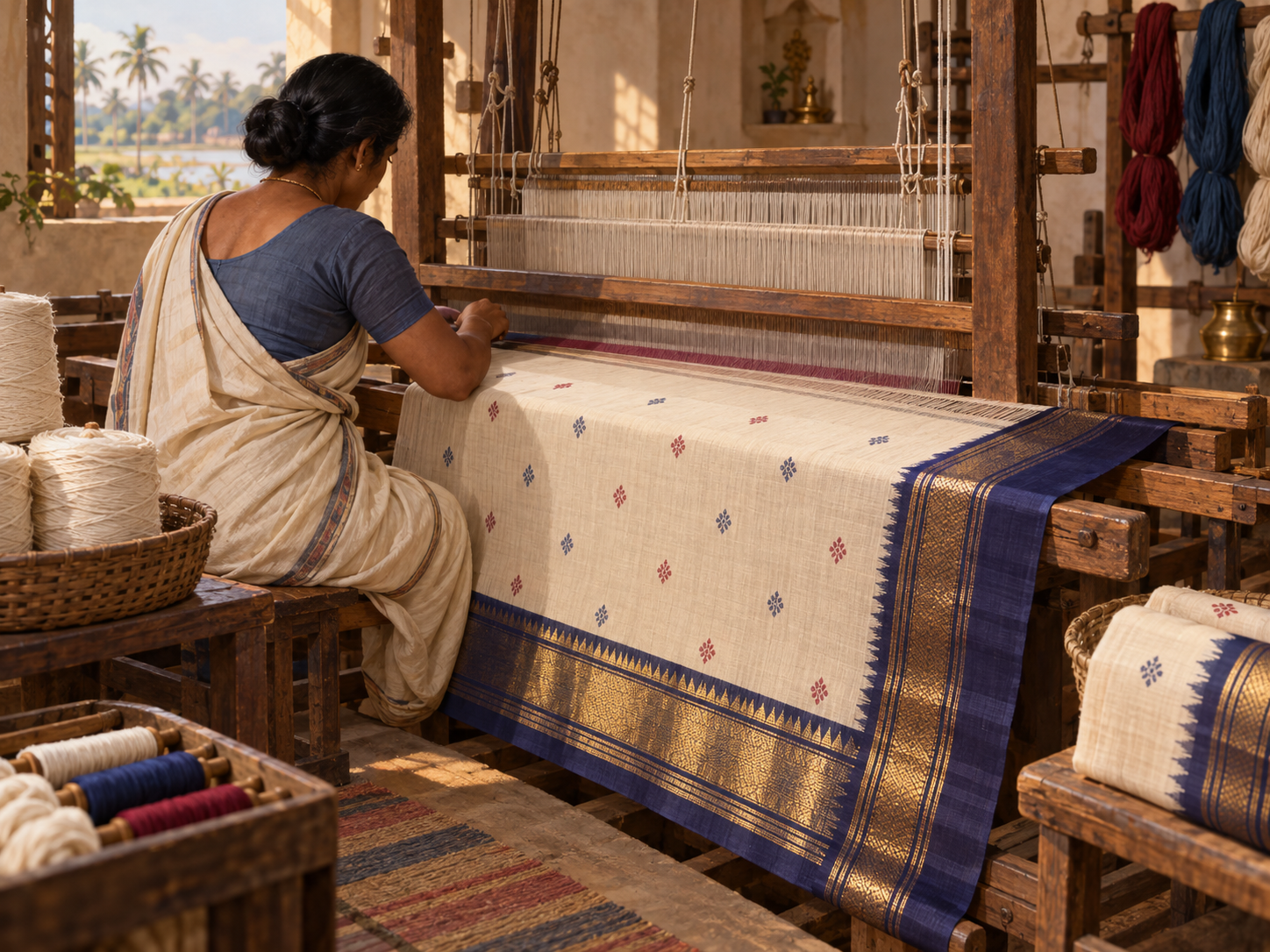
The story
The Bapatla District Administration identifies Chirala Silk Sarees (Kuppadam) as the district's One District One Product. Chirala's Padmasali and Devanga weaving communities work through primary co-operative societies and master-weaver networks, continuing a regional handloom economy centred on sarees and dress materials.
How it is made
After dyeing, warping and handloom sizing, yarn is prepared for pit-loom weaving. Kuppadam construction uses an interlocking or catch-card approach to form the border; the official ODOP profile notes that Chirala weavers developed broader 12–15 inch borders. Plain and twill weave structures are documented for the product.
Materials and character
Official ODOP specifications list cotton, silk and zari in the warp, with cotton and silk in the weft. Cotton, cotton-silk and pure-silk examples are all described. Fibre, loom method, zari quality and any origin claim still need seller evidence or certification for a specific purchase; the official page mentions GI proposals, not a confirmed GI registration.
Why it matters
Chirala's officially recognised ODOP tradition combines fine cotton comfort with silk, zari and skilled Kuppadam border weaving for ceremonial and everyday wear.
Explore Chirala-inspired sarees →Discovery matches are not authenticated Chirala products.
Government references
Information reviewed against Government of India sources. Last reviewed 2026-09-01.
Bapatla District Administration, Government of Andhra PradeshOne District One Product — Chirala Silk Sarees (Kuppadam) · Supports: Origin, tradition and making process ↗Development Commissioner (Handlooms), Ministry of TextilesOfficial handloom guidance and Handloom Mark resources · Supports: Handloom guidance ↗Ministry of Textiles, Government of IndiaAnnual Report 2024–25 — silk sector and Silk Mark information · Supports: Silk certification guidance ↗