 SUMAHAA← Back to Saree Heritage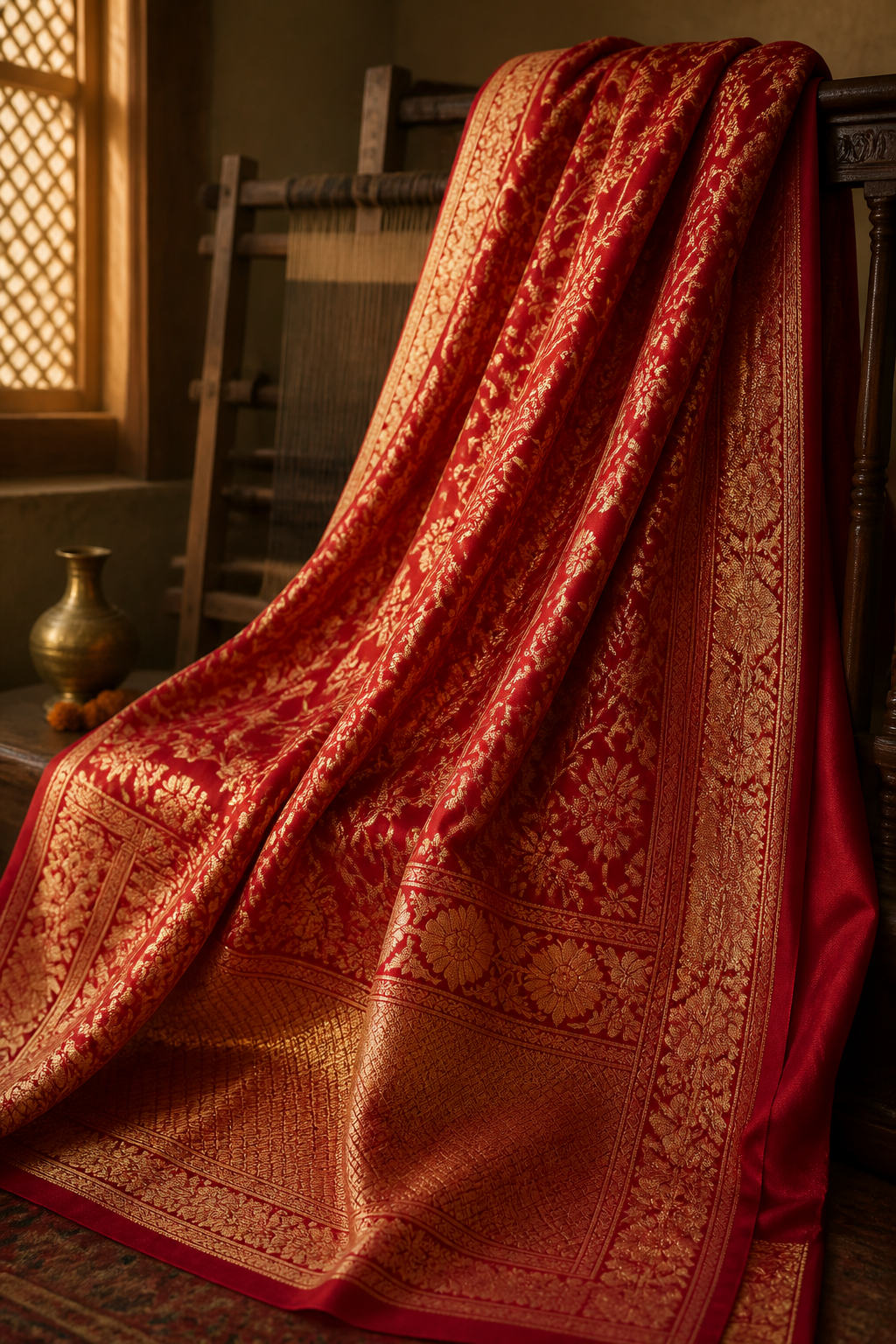
The story
Varanasi has been a textile and trading centre for centuries. The brocades familiar today developed through layers of court, pilgrimage and mercantile patronage, with major Mughal and later Maratha influence. Jacquard technology changed production in the twentieth century while the weaving community preserved its ornamental vocabulary.
How it is made
Designs are translated into loom instructions so supplementary silk or zari wefts can form motifs over the ground weave. Depending on the variety, artisans create butidar, jangla, tanchoi, tissue or other brocade effects before finishing loose threads and polishing the textile.
Materials and character
Silk is commonly paired with zari; contemporary sarees may also use organza, georgette or blended grounds. Metallic yarn composition has a major effect on cost and longevity.
Why it matters
A prominent North Indian bridal and ceremonial saree, valued for its brocade artistry and connection with Varanasi's weaving neighbourhoods.
Government references
Information reviewed against Government of India sources. Last reviewed 2026-09-01.
Development Commissioner (Handicrafts), Ministry of TextilesVaranasi Brocade · Supports: Origin, tradition and making process ↗Development Commissioner (Handlooms), Ministry of TextilesOfficial handloom guidance and Handloom Mark resources · Supports: Handloom guidance ↗Ministry of Textiles, Government of IndiaAnnual Report 2024–25 — silk sector and Silk Mark information · Supports: Silk certification guidance ↗